BAföG and a side job are not mutually exclusive - as long as you know the income limit and understand what actually counts toward it.
The BAföG Income Limit in 2026
While receiving BAföG, you are allowed to earn up to the current mini-job threshold of 603 euros per month (2026) without risking any deductions - that is 7,236 euros per approval period (typically 12 months). This exemption applies to all income from non-self-employed work.
The BAföG assessment is based on annual income, not monthly income. Someone who earns 800 euros at a trade fair one month and then barely works for a few months afterward will often stay below the limit.
What Counts as Income - and What Does Not
What is counted: gross earnings from non-self-employed work (i.e., wages and salaries), minus a standard deduction for work-related expenses. Not counted: child benefit, orphan's allowance, and certain scholarship components.
- Mini-job income: counted
- Student employee wages: counted
- Short-term employment (trade fairs, events): counted
- Parental assets: regulated separately, not part of the student's income
Strategy: Combining Trade Fair Jobs with BAföG
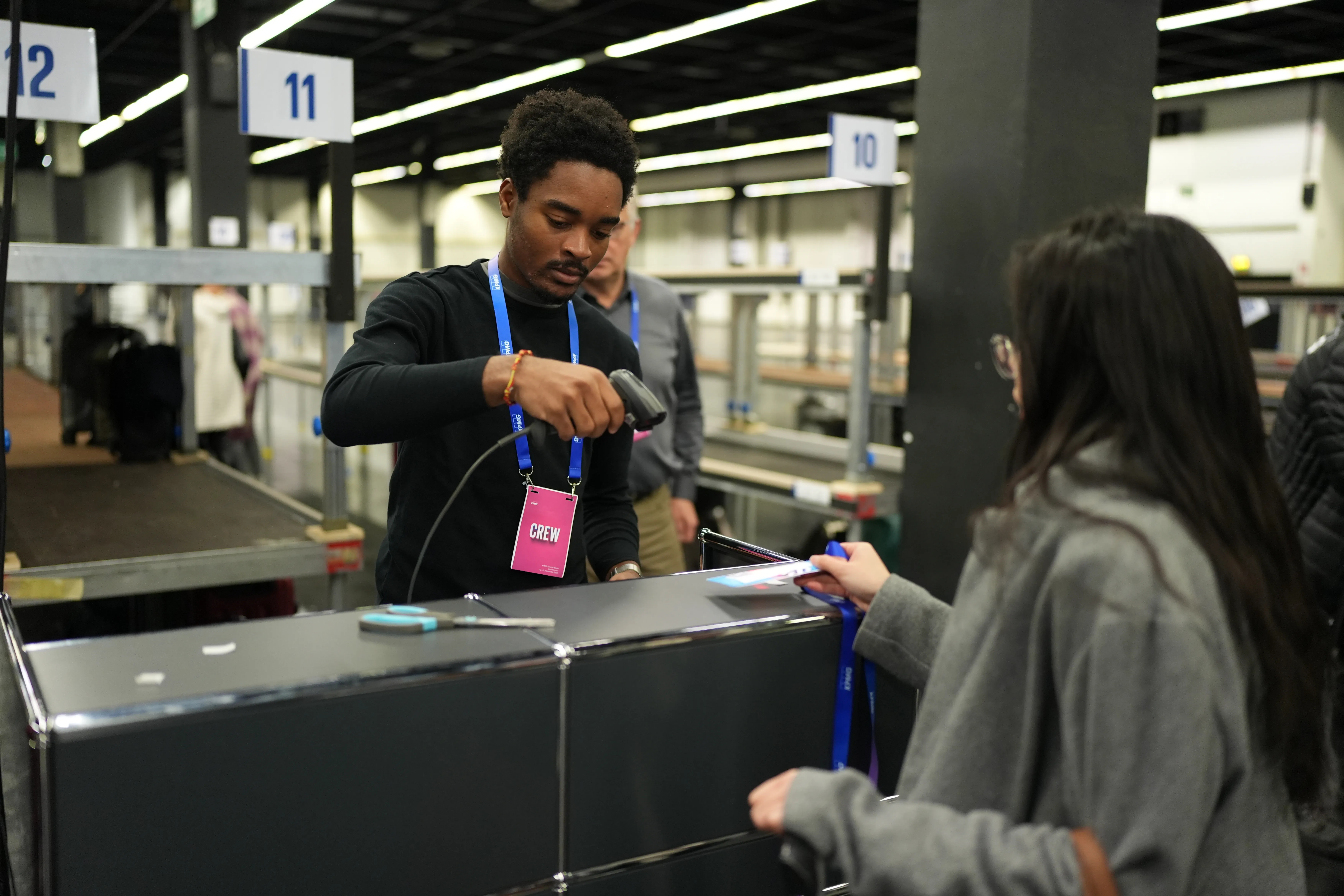
Students who use trade fair and event jobs as an income source benefit from one key advantage: these jobs are concentrated over just a few days, generate between 200 and 600 euros per assignment, and can be spread throughout the year to avoid exceeding the annual limit.
Anyone who knows their BAföG approval period and keeps track of planned trade fair assignments can actively manage their annual income. A simple spreadsheet tracking planned assignments and cumulative annual earnings is usually sufficient.
How the Exemption Is Calculated Correctly
The Federal Training Assistance Act specifies in § 21 BAföG how income is calculated for funding purposes. The authority deducts a flat rate of 22.3 percent from gross income from non-self-employed work for taxes and social security contributions - regardless of what was actually paid. The annual exemption of 7,236 euros is then applied to the remaining net income.
In concrete terms: if you earn 7,500 euros gross in a year, the authority first deducts approximately 1,673 euros (22.3 percent). The assessable income then amounts to roughly 5,828 euros - which is below the limit. You retain your full BAföG entitlement. Only when the adjusted net income exceeds 7,236 euros is the excess amount deducted from your BAföG.
§ 21 para. 1 BAföG: Income means, subject to paragraphs 2 to 5, the sum of positive income within the meaning of § 2 para. 1 and 2 of the Income Tax Act. The standard deduction for work-related expenses under § 9a EStG is taken into account.
Short-Term Employment: The Underrated Advantage for BAföG Recipients
In addition to mini-jobs and student employee positions, there is a third option that students frequently overlook: short-term employment. Under § 8 para. 1 no. 2 SGB IV, it is exempt from social security contributions if the employment is limited to no more than 3 months or 70 working days per calendar year and is not carried out on a professional basis. For students who specifically work at trade fairs, congresses, or major events, this is often the best choice.
Short-term employment does not involve pension insurance or health insurance contributions - which noticeably increases your take-home pay. Nevertheless, the income still counts for BAföG assessment purposes. Anyone who plans their working days carefully throughout the year stays on safe ground both in terms of social security law and BAföG law. On platforms like ucm.jobs student jobs, you will find exactly these kinds of short-term assignments with transparent hourly rates and flexible timeframes.
Common Mistakes BAföG Recipients Make with Side Jobs
Many students lose BAföG benefits not because they are unaware of the limit itself, but because of avoidable planning errors. These four situations cause problems most frequently:
- Ignoring the annual view: Someone earning 400 euros per month thinks they are safely below the limit. But 400 euros times 12 months is 4,800 euros gross - only after the flat-rate deduction does the assessable income emerge. That is still safe, but anyone who also works at three trade fairs over the summer can quickly exceed the limit.
- Confusing the approval period: The BAföG approval period is not always the calendar year. It starts with the month the application was submitted. Someone who applied in March has a period running from March to February of the following year. Side-job income is always assigned to exactly one approval period (based on when it is received) - keeping the calendar-year transition in mind avoids misjudging which period it falls into.
- Forgetting one-time payments: Holiday pay, Christmas bonuses, or a bonus after a trade fair assignment are fully counted in the year of payment - even if the assignment itself was brief.
- Failing to report changes: Anyone whose income increases significantly during the approval period and does not report this to the authority risks having overpayments reclaimed. The reporting obligation applies immediately, not just at the next application.
Airport Jobs and Trade Fair Jobs: Two Formats, One Smart Choice
Two job formats are particularly attractive for students receiving BAföG: assignments at trade fairs and congresses, and airport jobs. Both offer high hourly rates, predictable working times, and are easy to combine with studies - provided the annual total is kept in mind.
Trade fair and congress jobs typically last 2 to 5 days and yield between 200 and 700 euros per assignment at an hourly rate of 14 to 18 euros. Anyone who accepts four to six such assignments per year earns an attractive supplementary income - and with careful planning, stays well below the BAföG limit. Students at ucm.jobs can access exactly these assignments, coordinated and with a dedicated point of contact.
According to ucm.jobs data from 2025, students on trade fair assignments earn an average of 16.40 euros per hour. For a typical 4-day assignment with 8 hours per day, that amounts to gross earnings of around 524 euros per assignment.
What Happens if You Exceed the Limit
Exceeding the income limit does not automatically mean losing all BAföG. Instead, the excess amount is offset against the monthly funding entitlement - spread across the approval period. Someone who earns 500 euros too much loses roughly 41 euros per month from their funding - not a total loss, but real.
More problematic is the subsequent reclaim: if the BAföG authority determines during an income review that too much funding was paid out, a repayment notice follows. Anyone who does not respond will not receive a reminder - but a direct administrative act. Processing times at the authorities are often 6 to 18 months, meaning the repayment demand sometimes hits students in the following academic year. Forward-looking planning is therefore not a luxury but financial self-protection.
In practical terms: calculate your expected annual earnings now, compare them against your BAföG approval period, and then decide how many trade fair assignments you can accept this year. Anyone who plans their next student job deliberately earns more - without risking a single euro of BAföG.